
Here is a sketch of the article:
Metamask: Metamask Eth_requestaccounts not recovering the portfolio address after signing
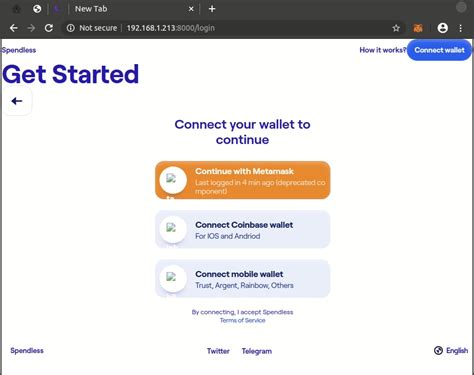
I integrate the metamask with my application Next.js with Wagmi and I encounter a problem in which, when combined with Metamaszek, the portfolio address is not immediately recovered. The application asks you to sign the web3 browser before requesting the portfolio address.
problem:
When the user connects to Metamask, he sends the “Eth_requestacts” request to recover the portfolio addresses. However, this process usually takes about 1-2 seconds and return the portfolio addresses in JSON format. Unfortunately, after logging in to Metamask using the Web3 browser provided by Wagmi, the application does not immediately demand the addresses of the portfolio.
problem:
As a result, my application Next.js asks you to sign through the API “Eth_requestaccounts’ API every time I try to sign with Metamask. This can lead to:
* Frequent demands : The user is asked to authenticate again every second, which can be annoying and disturb their work flow.
* Unnecessary errors : If the portfolio address is not correctly recovered, my application may throw errors when trying to access it.
How to fix:
To solve this problem, you must correctly handle the answer “Eth_requestaccounts”. Here are some approaches:
1. Use ‘ONSUCCESS’
You can use the “ONSUCCESS” hook delivered by Wagmi to wait for the portfolio address after requesting Eth_requestaccounts. This ensures that your application is waiting for the address before asking to sign re -signing.
`Jsx
Import {USSWAGMI} with "Wagmi";
Import Metamaskprovider from "Metamask-Prider";
const mypp = ({component, pagepps}) => {
Const {Connect} = Usingwagmi ();
return (
);
};
Export MyApp by default;
2. Use Onerror Hook
Alternatively, you can use the “Oneerror” hook provided by Wagmi to handle errors related to Metamas’ demands.
`Jsx
Import {USSWAGMI} with "Wagmi";
Import Metamaskprovider from "Metamask-Prider";
const mypp = ({component, pagepps}) => {
Const {Connect} = Usingwagmi ();
return (
);
};
Export MyApp by default;
3. Use Eth_requestaccounts' with the time limit
If you prefer to handle your answer yourself, you can use "Settimeout ()" to wait for the address before signing again.
Jsx
import {useeffect, usestate} with "react";
Import Metamaskprovider from "Metamask-Prider";
const mypp = ({component, pagepps}) => {
Const [Walletaddress, Setwalletaddress] = Usestate ('');
Const {Connect} = Usingwagmi ();
Useeffect (() => {
Fetch ( {walletaddress})
.Ten (answer => response.json ())
.Ten (data => setWalletAddress (data.address)))
.catch (error => console.error ('error:', error));
}, [Walletaddress]);
const handlesign = () => {
fetch ( {walletaddress}, {
Method: "post",
Headers: {'Content-Type': 'Application/Json'},
Body: json.strringym ({
From: Walletaddress,
To: '',
data: '',
}),
})
.Ten (answer => response.json ())
.Ten (data => console.log („Podpisano: ', dane))
.catch (error => console.error ('error:', error));
};
return (
);
};
These are just a few examples of how to deal with the answer `Eth_requestaccounts’ with Metamask in your application. Js with Wagmi.